Oct 20, 2026Guides
CNC Turning vs CNC Milling: Which Process Fits Your Custom Metal Part?
Learn the difference between CNC turning and CNC milling, and how to choose the right machining process for custom metal parts based on shape, tolerance and application.
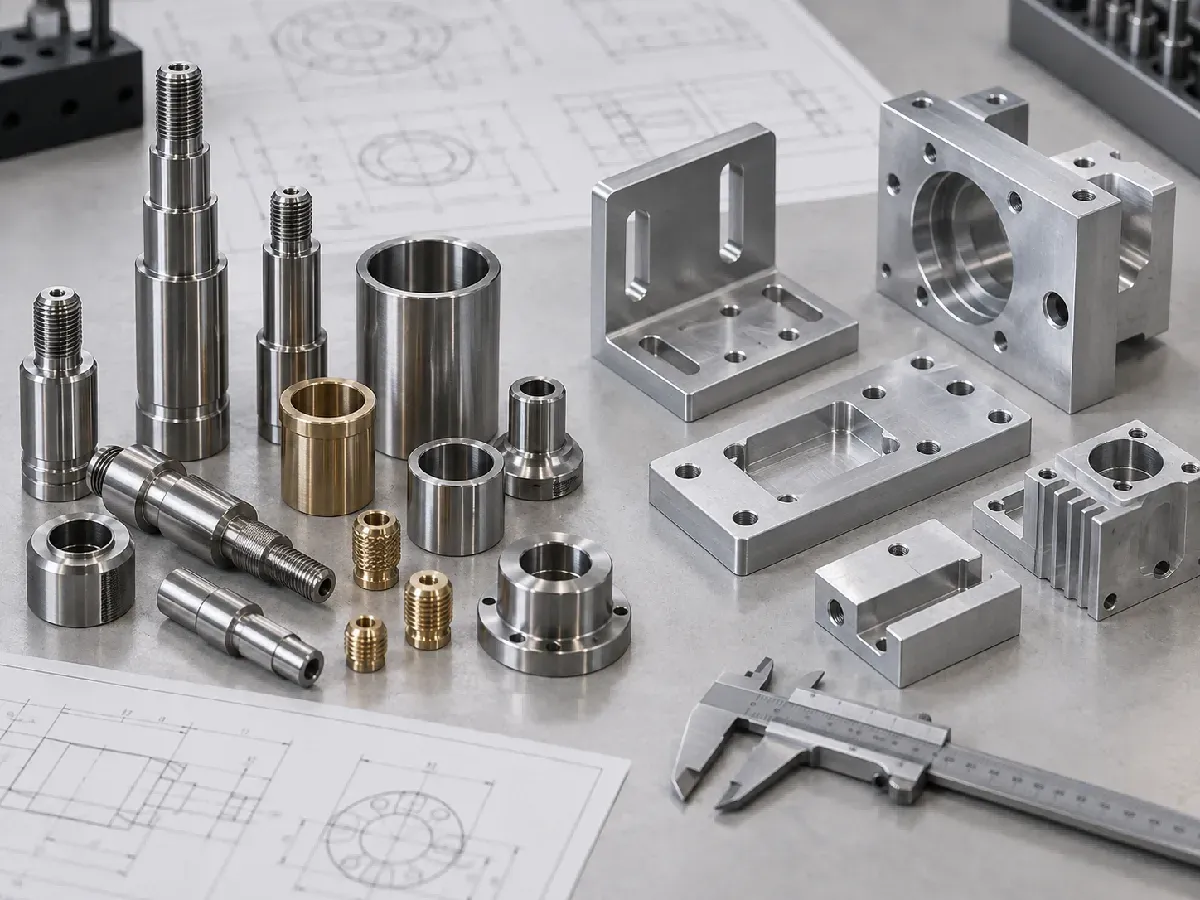
CNC turning and CNC milling are two common machining processes for custom metal parts. Both can produce accurate components, but they are suitable for different shapes, structures and applications.
For buyers, understanding the basic difference can make an RFQ clearer and help reduce quotation time.
What Is CNC Turning?
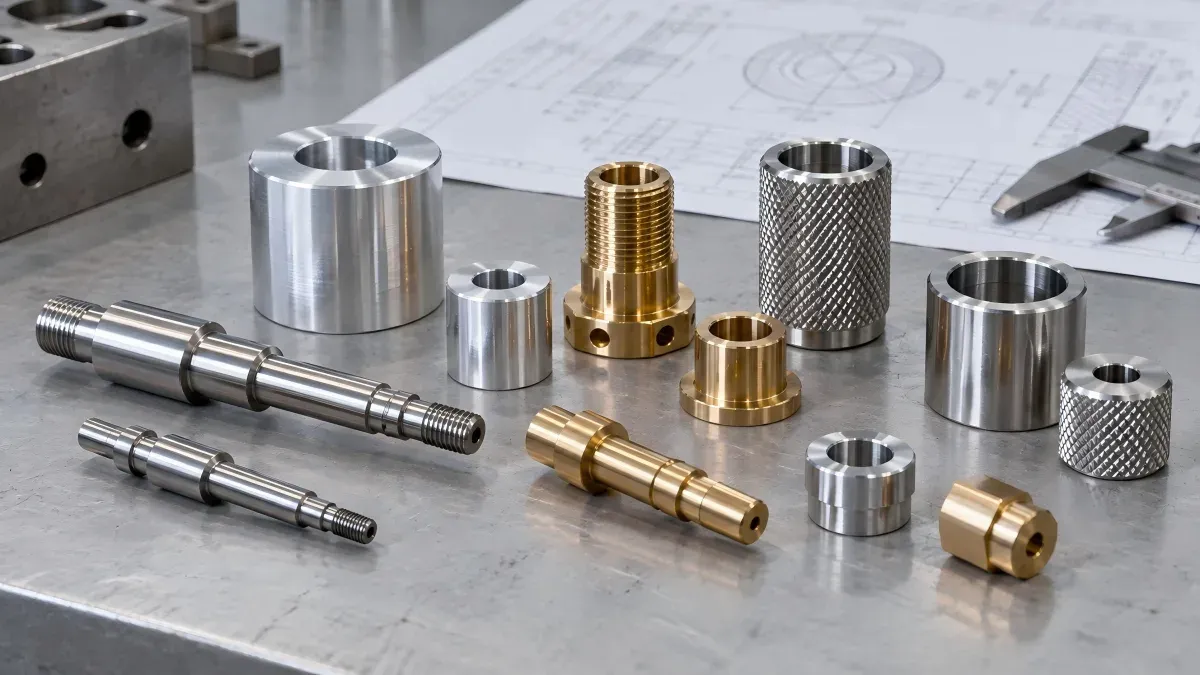
CNC turning is mainly used for round or cylindrical parts. During the process, the material rotates while cutting tools remove material from the outside or inside of the workpiece.
Typical CNC turned parts include shafts, pins, sleeves, spacers, bushings, threaded parts, brass inserts and other round components.
Turning is usually efficient for parts with outer diameters, inner holes, grooves, shoulders, threads and chamfers. If a part is mostly round and symmetrical, CNC turning is often the first process to consider.
What Is CNC Milling?
CNC milling is different. In milling, the cutting tool rotates and moves across the material to create holes, slots, pockets, flat surfaces and more complex shapes.
Typical CNC milled parts include brackets, plates, blocks, housings, covers, fixtures and parts with flat or angled surfaces.
Milling is suitable when the part has square shapes, side holes, slots, pockets, steps or irregular features. It is also commonly used when several surfaces need to be machined from different directions.
How to Choose the Right Process
The easiest way to choose between CNC turning and CNC milling is to look at the main shape of the part.
If the part is mainly round, such as a shaft, sleeve or threaded spacer, CNC turning is usually more suitable.
If the part is mainly flat, square, block-shaped or has pockets and slots, CNC milling is usually more suitable.
Some parts may need both processes. For example, a round turned part may need side holes or a flat milled surface. A milled housing may need precision bored holes or threaded features.
Material and Tolerance Considerations
Both turning and milling can be used with common materials such as carbon steel, stainless steel, brass, aluminum and other specified alloys.
Tolerance requirements should be checked carefully. Tight tolerances, surface roughness, concentricity, runout, flatness or perpendicularity may affect the machining process, inspection method and cost.
For custom parts, the selected process should match the part function, tolerance level and production quantity, not only the lowest unit price.
What Buyers Should Provide
To help the supplier review the part correctly, buyers should provide a drawing, material, surface finish, quantity, tolerance requirements and application details.
If there is no drawing, a sample, clear photos or a marked sketch can help start the discussion. For precision parts, a drawing is still recommended before sampling or production.
Final Note
CNC turning and CNC milling are not competing processes. They are different methods for different part designs.
A round shaft, sleeve or spacer is usually better suited for turning. A bracket, plate, block or housing is usually better suited for milling. Some custom metal parts may need both.
Hextro supports CNC turned parts, selected CNC machined parts and custom metal components according to drawings, samples and application requirements.
Related Products
Brass Threaded Inserts
Custom Metal Parts