Oct 20, 2026Quality Control
When Should You Use Brass Threaded Inserts in Plastic Parts?
Learn when to use brass threaded inserts in plastic parts, including heat-set, ultrasonic and press-fit options, boss design and quotation requirements.
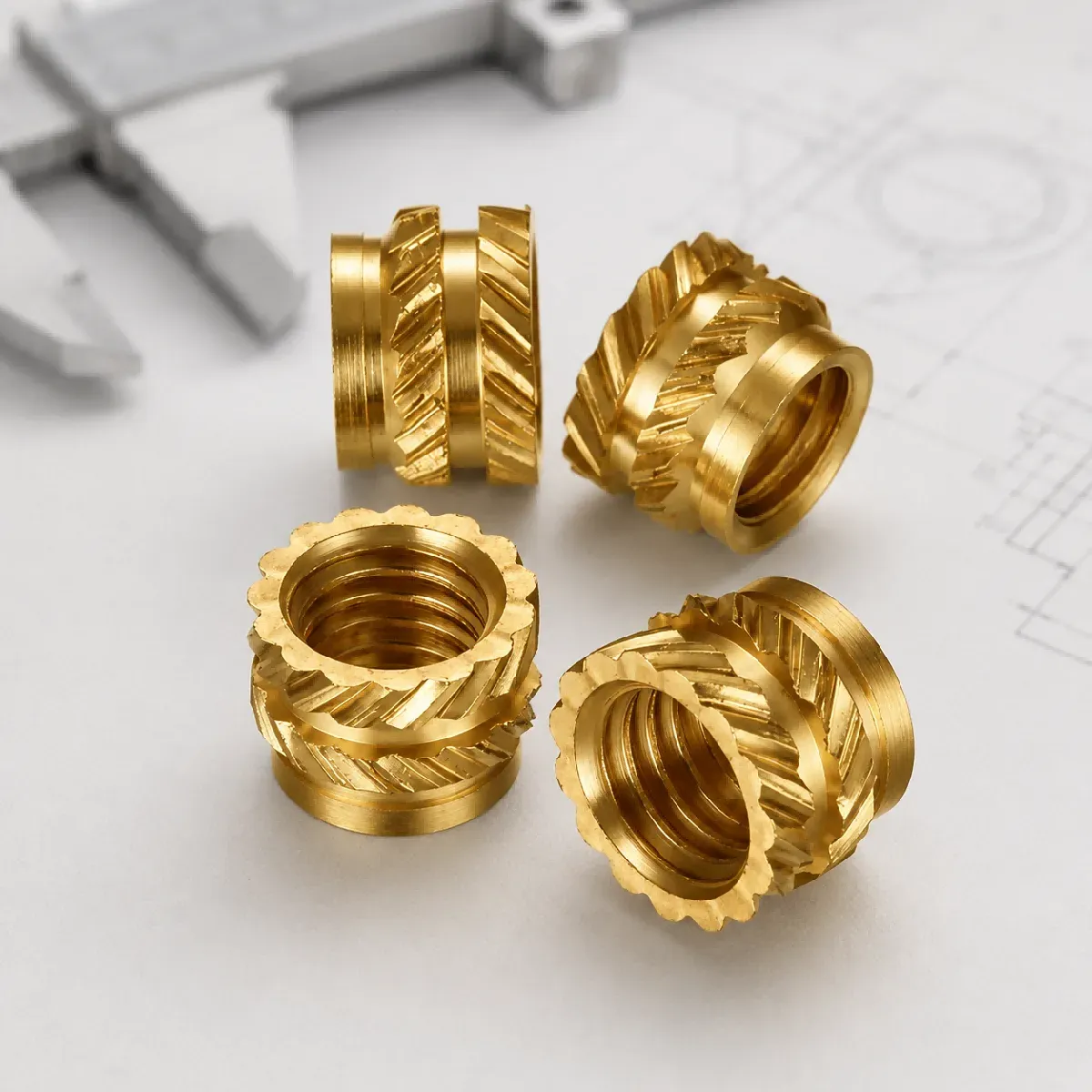
Brass threaded inserts are used to create durable and reusable metal threads inside plastic parts. They are commonly selected when a product needs stronger thread engagement or repeated assembly and disassembly.
For simple, low-load products, driving a self-tapping or thread-forming screw directly into plastic may be enough. But when the screw needs to be removed several times, the plastic thread can gradually wear, strip or become loose. In these cases, a brass insert may provide a more reliable solution.
The right choice depends on the plastic material, load, installation method, boss design and expected service life.
When Brass Inserts Are a Better Choice
Brass threaded inserts are useful when the joint needs to be opened and closed repeatedly.
They are often used in electronic housings, control boxes, appliances, automotive plastic parts, instruments and other products where screws may need to be removed during maintenance or servicing.
They can also improve pull-out strength and torque resistance compared with direct threading in plastic, especially when the plastic boss is designed correctly.
If the product is disposable, lightly loaded or assembled only once, a direct self-tapping screw may still be more economical.
Common Installation Methods
Heat-set inserts are installed by heating the brass insert and pressing it into a molded hole. The surrounding plastic softens and flows around the knurl, creating a strong mechanical lock after cooling.
Ultrasonic inserts use vibration to generate heat during installation. This method is often used in controlled production where fast and repeatable installation is required.
Press-fit inserts are pushed into the hole without heat. They can be practical for suitable materials and light-duty applications, but the hole size and knurl design must be carefully matched.
No single installation method is best for every plastic. The material, production volume and required holding strength should all be considered.
Plastic Material and Boss Design
The insert must match the plastic part, not only the screw thread.
ABS, PC, PA, PBT, PP and other plastics behave differently during installation. Harder or glass-filled materials may require different hole sizes and installation conditions from softer plastics.
Boss diameter, wall thickness, installation-hole diameter and hole depth are also important. If the hole is too small, the boss may crack or deform. If it is too large, pull-out strength may be reduced.
For new projects, sample installation and pull-out or torque testing are recommended before mass production.
Headed or Headless Inserts
Headless inserts are common when a compact design is needed and the insert can sit below or flush with the plastic surface.
Headed inserts provide a flange that can help control installation depth and increase bearing area. They may be useful where axial load or surface support is important.
Through-hole and blind styles are also available depending on the part design.
What Buyers Should Confirm
Before requesting a quote, buyers should provide:
thread size
outer diameter and length
headed or headless style
through-hole or blind design
knurl pattern
plastic material
installation method
hole and boss dimensions
material and surface finish
order quantity
Drawings, samples or clear photos can help reduce misunderstanding and speed up quotation.
Related Products
Thread-Forming Screws
Knurled Shafts
Custom Screws for Plastic Assembly
Final Note
Brass threaded inserts are not necessary for every plastic part. They are most useful when stronger holding force, repeated assembly or longer thread life is required.
A suitable insert must match the plastic material, installation method and boss design. Hextro supports brass threaded inserts and related custom fasteners according to drawings, samples and application requirements.